
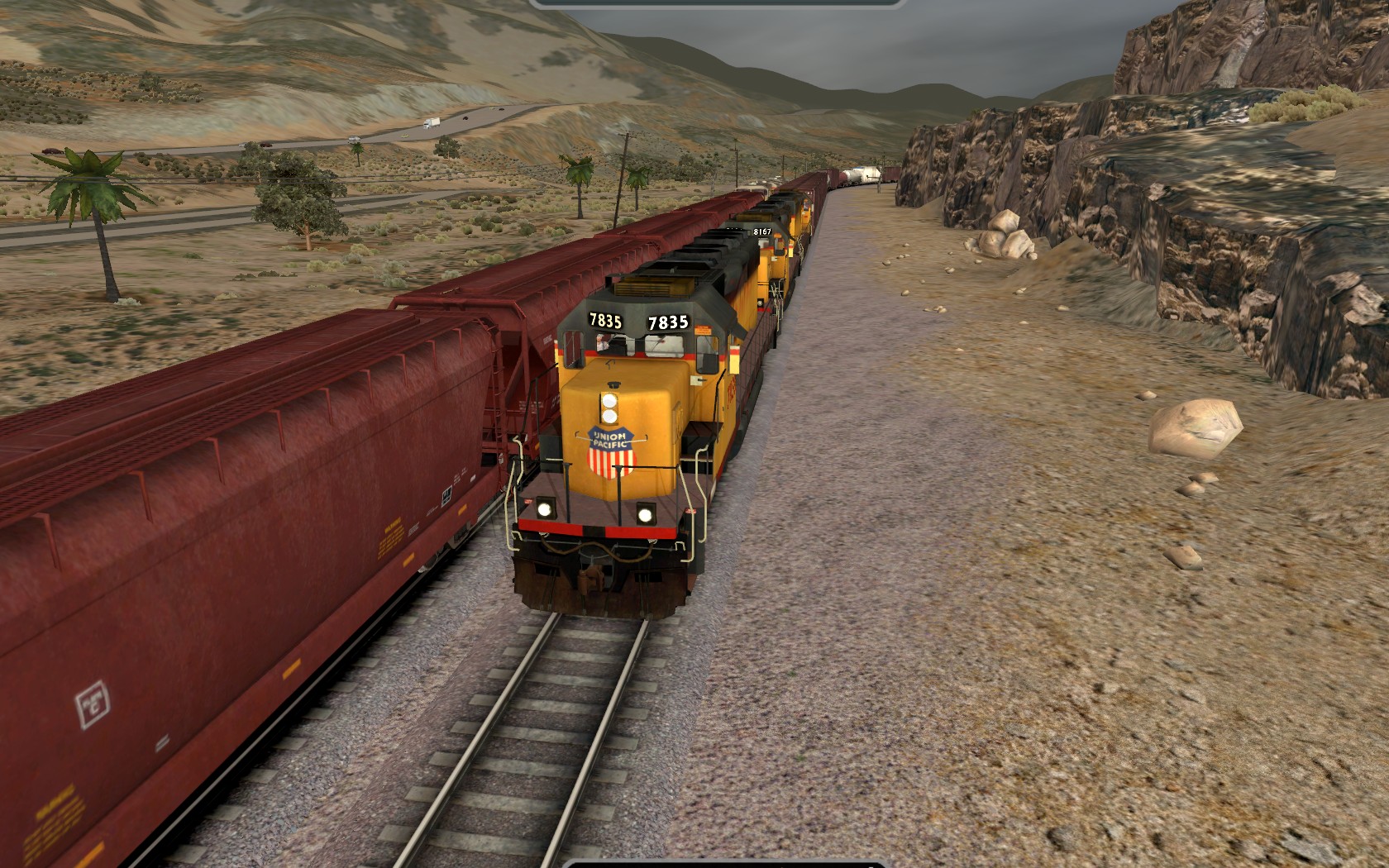
We provided project management and technical direction for Rail Simulator, the PC railway simulation developed by Kuju Entertainment, funded by Fund4Games and published and distributed by Electronic Arts.
Released in Europe in October 2007, Rail Simulator put players in charge of historic and contemporary locomotives on real railway routes. Its North American release followed in January 2008, adding the Barstow–San Bernardino route and Union Pacific trains. Players could choose between accessible driving settings and a fuller simulation of train operation.
Route creation was also part of the experience. A built-in track editor let players construct and share their own routes, extending the game beyond the railway journeys supplied in the box. That combination of driving and creation gave the project a scope that reached beyond a fixed set of levels.
Rail Simulator was our founding engagement, and it began in 2005 as a project due diligence. The project had an unusual structure for its time: Fund4Games, a games industry project finance company backed by independent investors, funded development, while EA Partners published and distributed. Kuju’s managing director described the arrangement as allowing a structure of IP ownership that would have been difficult through a conventional two-party deal.
After we submitted the due diligence, Kuju and Fund4Games asked us to come on board to manage and deliver the product. The engagement became the management of development work and its technical direction, and it ran past release. Kuju disbanded its railway team once the game shipped, and Rail Simulator Developments Ltd was formed in 2008 to carry the brand forward, backed by Fund4Games and drawing on developers from the original team. We stayed through its early days to see that handover through.
Both the company and the product have continued since. Rail Simulator Developments was restructured as RailSimulator.com in 2009 and renamed Dovetail Games in 2013. Rail Simulator’s successor appeared as RailWorks in 2009 and, through a long run of annual editions, is still developed and published today as Train Simulator Classic — nearly two decades of continuous development from the project described here. Rail Simulator is the earliest project in our portfolio, and the work that started the company; the virtual worlds, mobile games and interactive installations that followed drew on the same experience of managing software development.
Further reading: EA’s January 2008 release announcement (PDF) and Game Developer’s report on the Fund4Games arrangement, 25 July 2005.