
During 2020–2021, we developed The Reality Lab, a proof-of-concept mixed reality teaching platform supported by Innovate UK. It addressed a problem made urgent by lockdown: how to deliver practical lessons remotely when students could no longer access specialist spaces or equipment, such as a science laboratory or an artist’s studio.
Registered as An Augmented Reality Teaching Platform for Physical and Interactive Remote Learning, the project received approximately £75,000 in Innovate UK funding. The funded period concluded in February 2021.
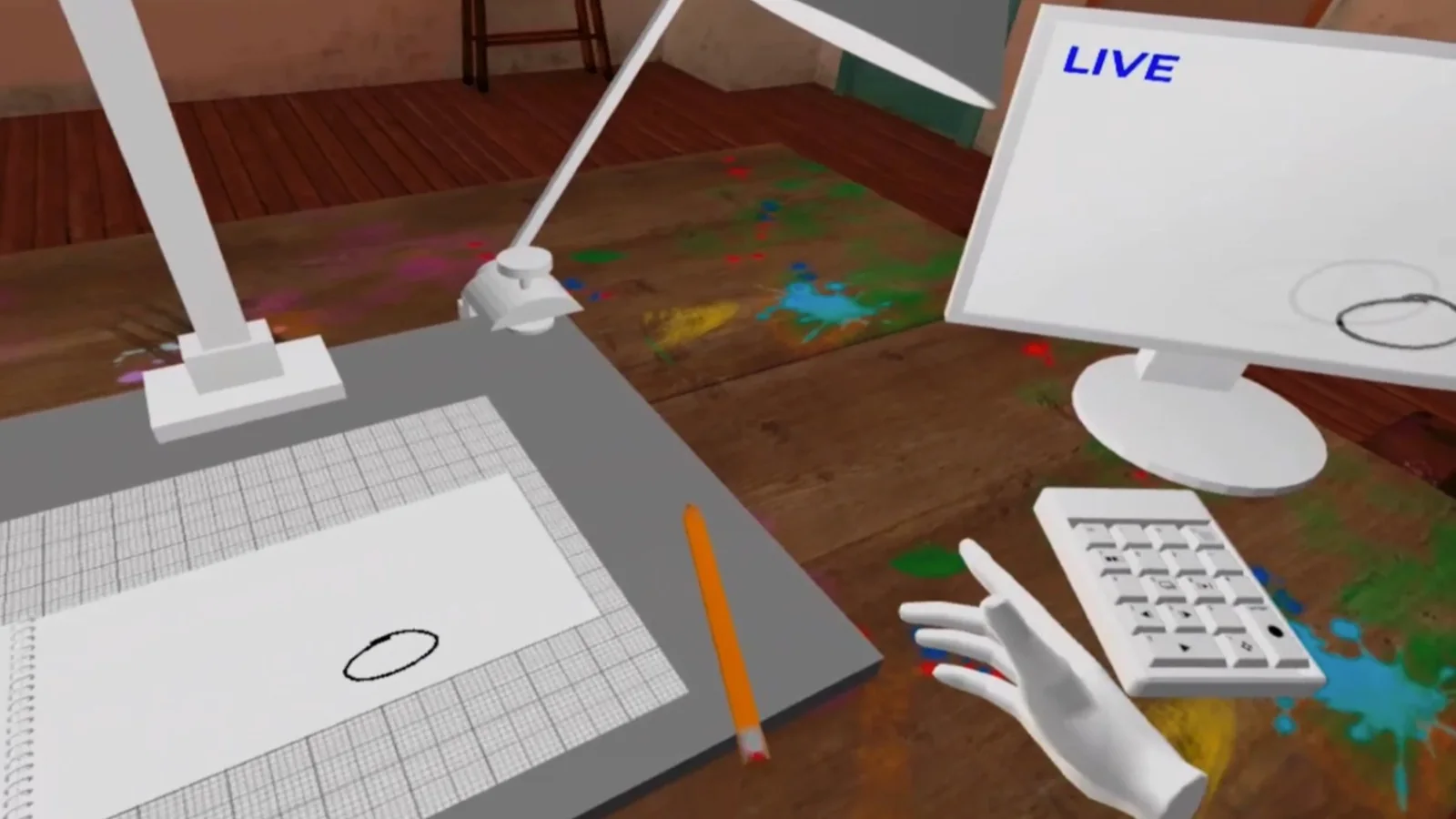
Working with the University of Edinburgh’s animation department, we chose a first-year bouncing-ball animation lesson as the basis for the demonstrator. The lesson used a down-shooter camera rig, providing a practical example of teaching that would normally depend on being in an animation studio.
We implemented that lesson as an interactive proof of concept, with the same core lesson content running on Magic Leap One and Oculus Quest. The cross-platform approach allowed us to explore both mixed reality and virtual reality as ways of delivering practical teaching.
The work also helped identify questions about content production, scalability and what would be needed to turn a demonstrator into a product. Beyond the immediate restrictions of the pandemic, we saw potential applications in distance learning, accessibility and helping institutions maintain practical teaching when access to facilities was disrupted.
The Innovate UK technology provided the basis for a further demonstrator commissioned by the University of Edinburgh, with Edinburgh College of Art as the client. That work was funded through Creative Informatics and co-funded by Insurgent Studios, connecting The Reality Lab to our ECA animation archive project.
Image: the virtual animation desk from The Reality Lab demonstrator, running the bouncing-ball lesson on a down-shooter camera rig.
Further reading: UKRI’s project record, reference 62756.